Actuator ranges
ACTREG makes four families of quarter-turn actuator. They are chosen on the shape of the valve’s torque demand, the failure mode the process needs, and what the site has available to drive them — air, hydraulic oil or electricity.
- Ranges
- 4
- Output torque
- 5 – 250,000 Nm
- Rotation
- 90°
- Valve interface
- ISO 5211
From a 5 Nm damper to a 250,000 Nm pipeline ball valve.
Four mechanisms cover the whole span, and they overlap on purpose. Where two ranges meet, the choice is made on torque curve, weight and failure mode rather than on capacity alone.
Rack and pinion
ADA / ASR — 5 to 6 500 Nm
Scotch yoke, pneumatic double acting
SY01 — 293 to 258 616 Nm
Scotch yoke, pneumatic spring return
SY01 — 172 to 71 046 Nm
Scotch yoke, hydraulic double acting
SY02 — 315 to 250 000 Nm
Output torque in Nm, logarithmic
Two mechanisms do most of the work.
Rack and pinion for compact, constant-torque duty; scotch yoke when the valve needs its torque at the seat and the figures run into six digits. Hydraulic and electric drives sit on the same valve interface.
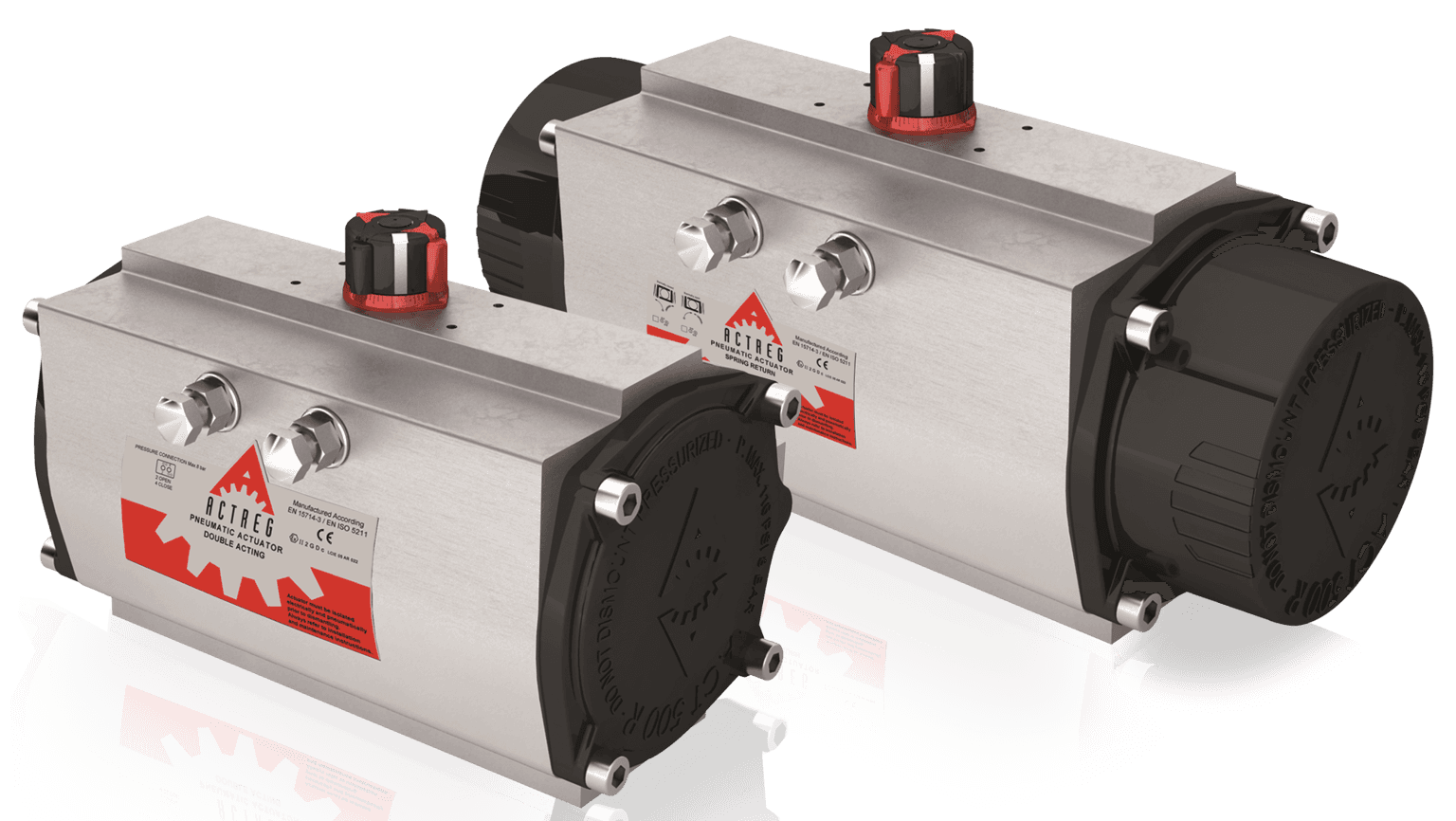
ADA / ASR
Rack and pinion actuators
5 – 6 500 Nm
A compact pneumatic actuator for quarter-turn valves up to 6,500 Nm, built on an anodised aluminium body with two opposed pistons driving a central pinion. Because the lever arm never changes, double-acting torque is constant across the full 90°.
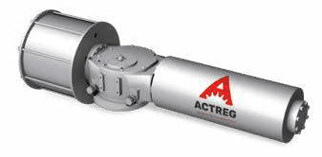
SY01 / SY02 / SY01K
Scotch yoke actuators
293 – 258 616 Nm
A heavy-duty quarter-turn actuator available in ten sizes from F10 to F60 across fourteen body variants, reaching 258,616 Nm pneumatically and 250,000 Nm hydraulically. The scotch yoke geometry delivers its peak torque at the seat, matching the point where a ball or butterfly valve demands most.
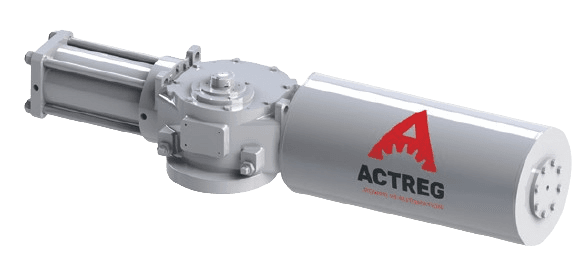
SY02
Hydraulic actuators
315 – 250 000 Nm
Hydraulic quarter-turn actuators in double-acting and spring-return configurations, for duty where the available air supply cannot produce the required torque or where stroke speed must be closely controlled.
Electric actuators
Quoted per project
Electric quarter-turn actuators for sites with no compressed air or hydraulic ring main, specified alongside the pneumatic range so a single plant can standardise on one valve interface.
The seal compound sets the temperature window.
Everything else about a rack and pinion body stays the same across the four constructions below. Choosing one is a question of how cold the site gets in winter and how hot the line runs in service.
NBR O-ring
Standard construction
FKM O-ring
High temperature
Silicone O-ring
Low temperature
Silicone O-ring, 316 pinion
Very low temperature
Ambient and process temperature in °C
Built to the interfaces your valve and skid already use
- ISO 5211
- Valve mounting flange and drive dimensions
- DIN 3337
- Octagonal drive on the actuator output
- NAMUR
- Direct solenoid valve mounting, no external tubing
- VDI/VDE 3845
- Accessory bracket for switchboxes and positioners
Not sure which range fits?
Send the valve data and we will come back with the range, size and construction we would specify, and the torque calculation behind it.
- What to send
- Valve type and size, required torque including safety factor, available supply pressure, failure mode, and the ambient and process temperatures.