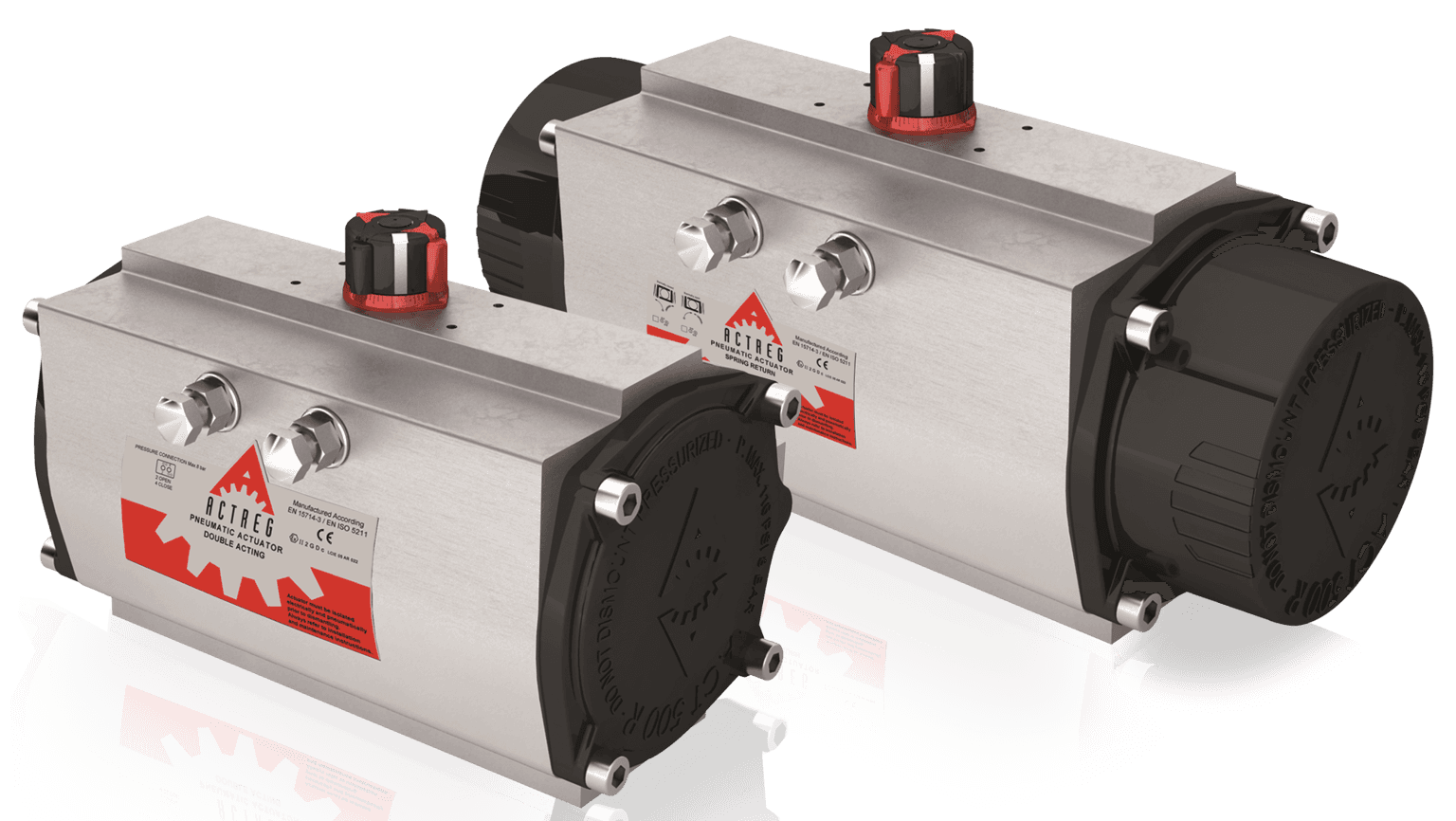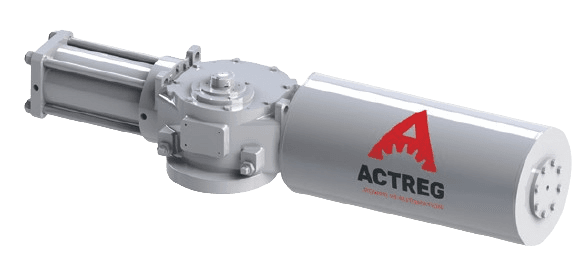
Scotch yoke actuators
A heavy-duty quarter-turn actuator available in ten sizes from F10 to F60 across fourteen body variants, reaching 258,616 Nm pneumatically and 250,000 Nm hydraulically. The scotch yoke geometry delivers its peak torque at the seat, matching the point where a ball or butterfly valve demands most.
- Output torque
- 293 – 258 616 Nm
- pneumatic double acting, sizes F10 to F60
- Rotation
- 90°
- Series
- SY01 / SY02 / SY01K
- Sizes
- F10 – F60
- ten sizes, 500 Nm to 250,000 Nm
- Body variants
- 14
Series
SY01
Pneumatic
SY02
Hydraulic and high pressure
SY01K
Compact pneumatic
General characteristics
Each unit is built for long service with little maintenance. The centre body is fully enclosed and watertight, with O-ring covers, and a guide that takes the transverse force of the yoke so the plunger stays aligned. External screws set valve travel anywhere between 80° and 100°.
Ten sizes, F10 to F60, across fourteen body variants
Pneumatic double acting 293 to 258,616 Nm
Pneumatic spring return 172 to 71,046 Nm end torque
Cylinder mounts to one or both sides of the centre body
Construction
Actuator body
More than ten sizes, from F10 at 500 Nm to F60 at 250,000 Nm.
- 1
Internal O-ring, so the centre body stays watertight.
- 2
NAMUR face for a limit-switch box or a positioner.
- 3
Threaded ports at the front and rear of the body for the pneumatic control system.
- 4
Optional vent valve, to relieve overpressure from mechanical movement and to keep water or corrosive air out.
Internal parts
The same size range, shown as the sliding and rotating stack.
- 4
Rotary spherical torque transmitter.
- 5
Replaceable bushings on the sliding and rotating parts, rated for dry and lubricated service.
- 6
PTFE-coated auxiliary slide bar, so axial load stays off the main bar.
- 7
The yoke joins the plunger to the guide block. It takes the side-load deflection and cuts wear on the plunger, the bushings and the seals.
Torque and modular build
Scotch yoke actuators are made in several models by centre-body size and cylinder diameter, in single acting and double acting, for quarter-turn valves across a wide pressure and temperature band. A symmetric yoke is available where the valve's own torque curve allows it, which keeps weight and cost down.
The centre body is modular. A pneumatic or hydraulic cylinder mounts to one side or to both. A single-acting spring cylinder mounts to either side for emergency shutdown. Finished and semi-finished accessories are held in stock, so a unit can be assembled and shipped on a short lead time.
Modular ratings
- Hydraulic pressure
- Up to 135 barg (1,499 psig)
- Pneumatic pressure
- Up to 8 barg (116 psig)
- Output torque
- Up to 250,000 Nm (185,000 lbf·ft)
Temperature constructions
Standard
−20 °C to +80 °C
Low temperature
−40 °C to +80 °C
High temperature
−20 °C to +120 °C
Extreme low temperature
down to −60 °C
Ambient and process temperature in °C
Models and data sheets
Published sizes in the scotch yoke actuators range, with the current sheet for each. Every sheet carries its revision in the file name, so you can tell at a glance whether the copy in your project folder is the one in force.
SY01 scotch yoke pneumatic 1st generation
Scotch yoke pneumatic actuator 1st generation single flange
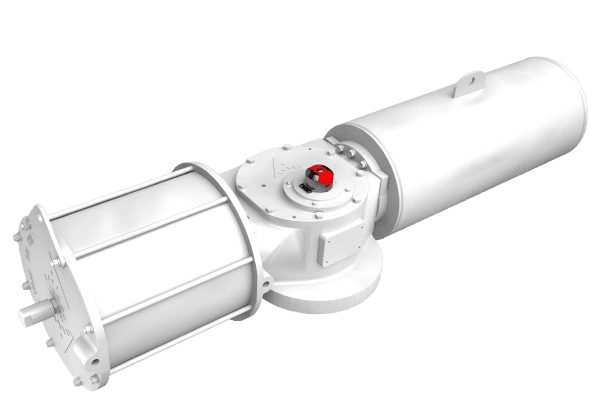
SY01 scotch yoke pneumatic 2nd generation
Scotch yoke pneumatic actuator 2nd generation dual flange
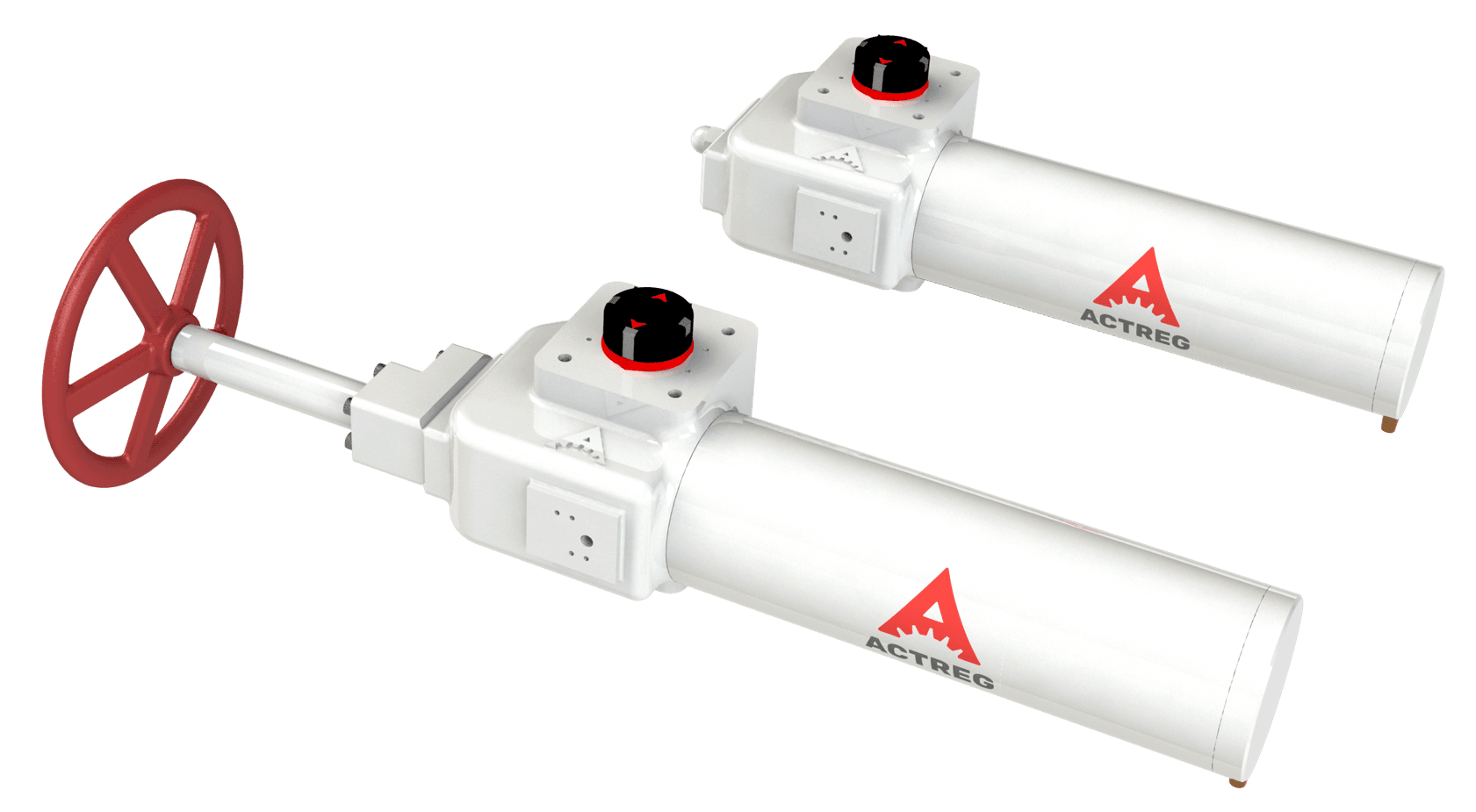
SY01K scoth yoke pneumatic compact
Scoth yoke pneumatic actuator compact
Data sheets
SY01 scotch yoke pneumatic 1st generation · English1
SY01K scoth yoke pneumatic compact · English1
SY01K scoth yoke pneumatic compact · Spanish1
Dimensional drawings, STEP models and the full catalogues are in the download library.
Interfaces
- ISO 5211
- Valve mounting flange and drive dimensions
- DIN 3337
- Octagonal drive on the actuator output
- NAMUR
- Direct solenoid valve mounting, no external tubing
- VDI/VDE 3845
- Accessory bracket for switchboxes and positioners